What’s in Your Mix? Why Weed Control Should Shape Your Food Plot Plan.
What’s in Your Mix? Why Weed Control Should Shape Your Food Plot Plan.
By Joyce Allison Tredaway, Ph.D.
Whitetail Institute
Creating your own food plot mix can be part of the fun of food plot management. Rather than buying a pre-made blend, many hunters select individual species and build a custom mixture designed around their property, goals and local conditions.
There’s nothing wrong with taking that approach. But there’s one important question that needs to be answered before the seed goes in the ground:
How are you going to control weeds?
Too often, that question comes after the plot is planted, the crop has emerged and weeds are beginning to compete with the desirable forage.
The Weed Control Problem with Diverse Food Plot Mixes
One of the most common questions I receive sounds something like this:
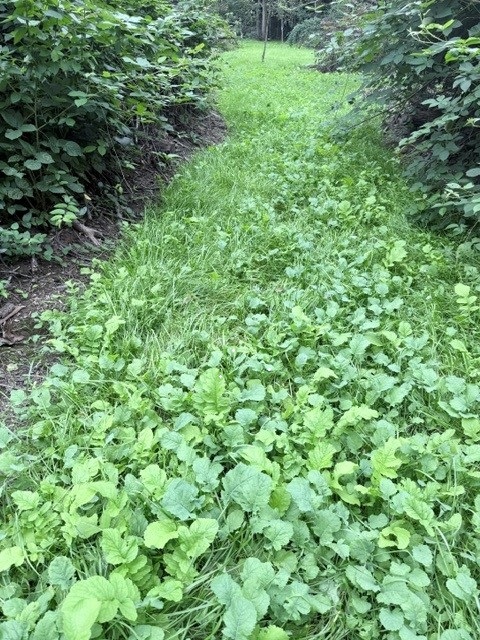
“What can I spray for broadleaf weeds and grasses in a mixture containing annuals and perennials, including small grains, brassicas, chicory and legumes?”
Unfortunately, the answer is simple, but probably not the one a food plotter wants to hear: There is no herbicide that can be applied to that combination without injuring one or more of the desirable species.
Consider some common food plot herbicide options:
- Slay Maxx® will kill small grains and brassicas.
- 2,4-DB will kill brassicas and chicory.
- Arrest Maxx® will kill small grains.
- Stinger® (clopyralid) will kill legumes.
When all those desirable plant types are growing together, you essentially eliminate your selective postemergence herbicide options.
Once such a diverse mixture is established, there simply isn't a selective herbicide solution that will control the weeds while protecting everything you intentionally planted.
What Can You Do Once the Plot Is Established?
If you've already planted a diverse mix and weeds become a problem, your options are limited.
One option is to wait until the first frost, which can suppress many annual weeds. Another is to mow the plot before weeds produce seed, helping reduce further spread.
It's important, however, to understand the distinction between suppression and control.
Mowing is a form of weed suppression, not weed control.
It may help reduce weed competition or prevent some weeds from producing seed, but it doesn't provide the same level of management that an effective herbicide program can offer.
Plan for Weeds Before You Plant
The best time to think about weed control isn't when weeds appear. It's before you select your seed mixture.
Planning is one of the most important aspects of successful food plot management, and your weed control strategy should be part of that plan from the beginning.
Before planting, ask yourself:
- What weeds are already present in this field?
- Which weeds have historically caused problems?
- What species do I plan to grow?
- Which herbicides are compatible with those species?
- If weeds emerge after planting, will I have an effective way to control them?
The answers may influence what you ultimately decide to plant.
Don't Choose a Mix Based on Forage Value Alone
It's easy to focus on what you want growing in a food plot: clover, chicory, brassicas, small grains or other highly attractive forage species.
But forage value is only part of the equation.
The species you plant should also be selected with future weed control options in mind.
The more diverse a custom mix becomes, the more challenging selective weed control can become. By including plants from several different categories, you may unintentionally eliminate herbicide options that would otherwise allow you to protect your food plot investment.
And that investment matters. Seed, fertilizer, lime, equipment, fuel and your time all go into establishing a successful plot. If weeds can't be managed effectively, a significant portion of that investment may be lost.
The Bottom Line
Building your own food plot mix can be rewarding, but don't let weed management become an afterthought.
Know your weed control options before deciding what's going into the mix.
A little planning before planting can give you more options later, protect your seed investment and put you in a better position to grow a productive food plot.
When it comes to managing weeds, what you choose to plant today can determine what you're able to spray tomorrow.