What Is a Good Burndown for a Fall Food Plot?
What Is a Good Burndown for a Fall Food Plot?
By Joyce Allison Tredaway, Ph.D.
Whitetail Institute
A successful fall food plot starts well before the seed hits the ground. One of the most important steps you can take is starting with a clean seedbed.
Existing weeds and vegetation compete with newly emerging food plot seedlings for sunlight, moisture, nutrients and growing space. If that competition is not eliminated before planting, it can slow establishment and reduce the overall quality of your food plot.
That’s where a good burndown comes in.
What Is a Burndown?
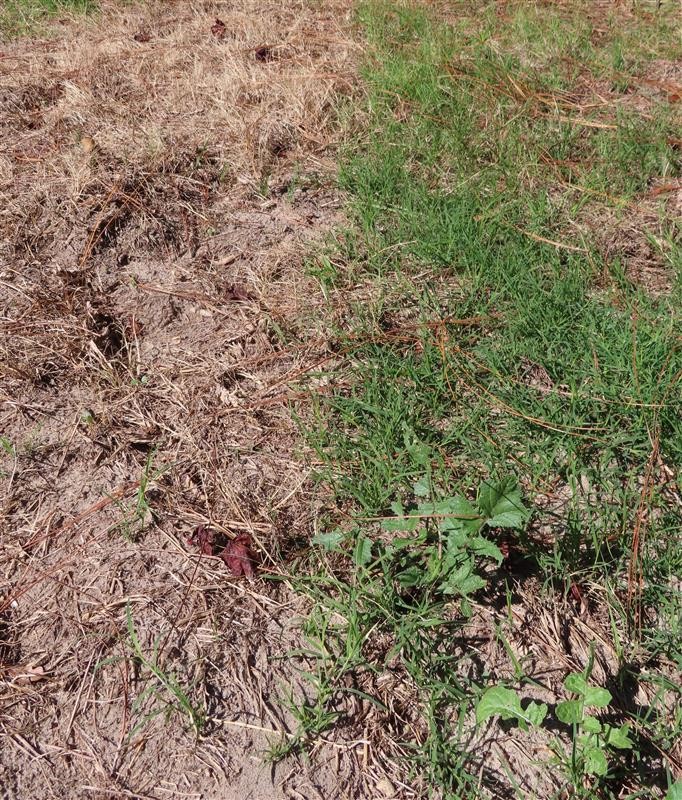
A burndown herbicide application is designed to kill existing, actively growing weeds and vegetation before planting. The goal is simple: remove competition so your food plot seedlings get the strongest possible start.
The best burndown program depends on the weeds growing in your field. In many situations, glyphosate combined with either 2,4-D or triclopyr provides an effective approach.
Glyphosate: A Good Starting Point
Glyphosate is a non-selective herbicide that controls many annual and perennial grasses along with numerous broadleaf weeds.
However, glyphosate alone may not always provide the control you need. The prevalence of glyphosate-resistant weeds, along with reduced performance on certain broadleaf species, can make the addition of a broadleaf herbicide valuable.
Think about the weeds you're trying to control before choosing your tank-mix partner.
When to Consider 2,4-D
If annual broadleaf weeds are the primary concern, 2,4-D amine can be an economical and effective tank-mix partner with glyphosate.
Adding 2,4-D can improve control of many common annual broadleaf weeds and help prevent surviving vegetation from competing with your new food plot.
When Triclopyr May Be the Better Choice
If your food plot contains perennial broadleaf weeds, woody plants or other difficult-to-control species, triclopyr may be the better option.
Its activity on tougher broadleaf and woody plants can make it particularly useful when you're reclaiming an overgrown plot or dealing with persistent problem vegetation.
What About Glufosinate?
Glufosinate is another non-selective herbicide that provides broad-spectrum weed control. Despite their similar names, glufosinate and glyphosate are distinctly different herbicides belonging to different chemical families.
Glufosinate is a contact herbicide, meaning it works on the plant tissue contacted by the spray. As a result, thorough spray coverage is especially important.
It generally performs best on small, actively growing weeds during warm temperatures and high humidity. The middle portion of the day, approximately 10 a.m. to 2 p.m., can provide favorable application conditions.
Compared with glyphosate, glufosinate can require more attention to application conditions. Pay close attention to weather, spray coverage and spray volume when using it.
Don't Burndown and Plant Too Quickly
Timing is an important part of a successful burndown program.
Glyphosate has no soil residual activity and controls only actively growing vegetation. While 2,4-D and triclopyr generally have minimal soil activity, they can persist long enough to affect emerging seedlings if you plant too soon after application.
As a general guideline, allow approximately three weeks between the burndown application and planting when using these herbicides. Always follow the herbicide label, including crop-specific planting intervals and application requirements.
A Clean Start Pays Off
It can be tempting to hurry through seedbed preparation when fall planting season arrives, but taking the time to eliminate existing vegetation can pay dividends throughout the season.
Starting with a clean seedbed can:
- Reduce competition for sunlight, moisture and nutrients
- Give desirable forage seedlings an opportunity to establish quickly
- Reduce early-season weed pressure
- Improve overall stand quality
- Help maximize the return on your food plot investment
Ultimately, your fall food plot is only as strong as the start you give it. Eliminate the competition first, plant at the appropriate time and give your forage the opportunity to develop into a vigorous, productive stand that provides quality nutrition throughout hunting season.
Important: Herbicide rates, tank-mix compatibility, application requirements and planting intervals vary by product and crop. Always read and follow the product label before application.