The Three-Legged Stool of Weed Management in Food Plots
The Three-Legged Stool of Weed Management in Food Plots
W. Carroll Johnson, III, PhD
Agronomist and Weed Scientist, Whitetail Institute
As summer approaches and food plots begin to take shape, one thing becomes certain: the annual battle with weeds is on the horizon. Every land manager dreams of a “magic bullet” herbicide—one product that controls every weed in every food plot mix. It would make life simple. But that idea is pure fantasy.
The truth is that very few herbicides are labeled for food plots, and the weeds that challenge commercial farmers (who have dozens of herbicide options) are the same weeds that challenge food plotters. With a much smaller herbicide toolbox, relying on chemicals alone is a losing strategy.
So what does work?
A shift in mindset—from searching for a single solution to building a balanced, resilient system known as Integrated Weed Management.
What Is Integrated Weed Management?
Integrated Weed Management (IWM) is built on three equally important pillars:
- Cultural control
- Mechanical control
- Chemical control
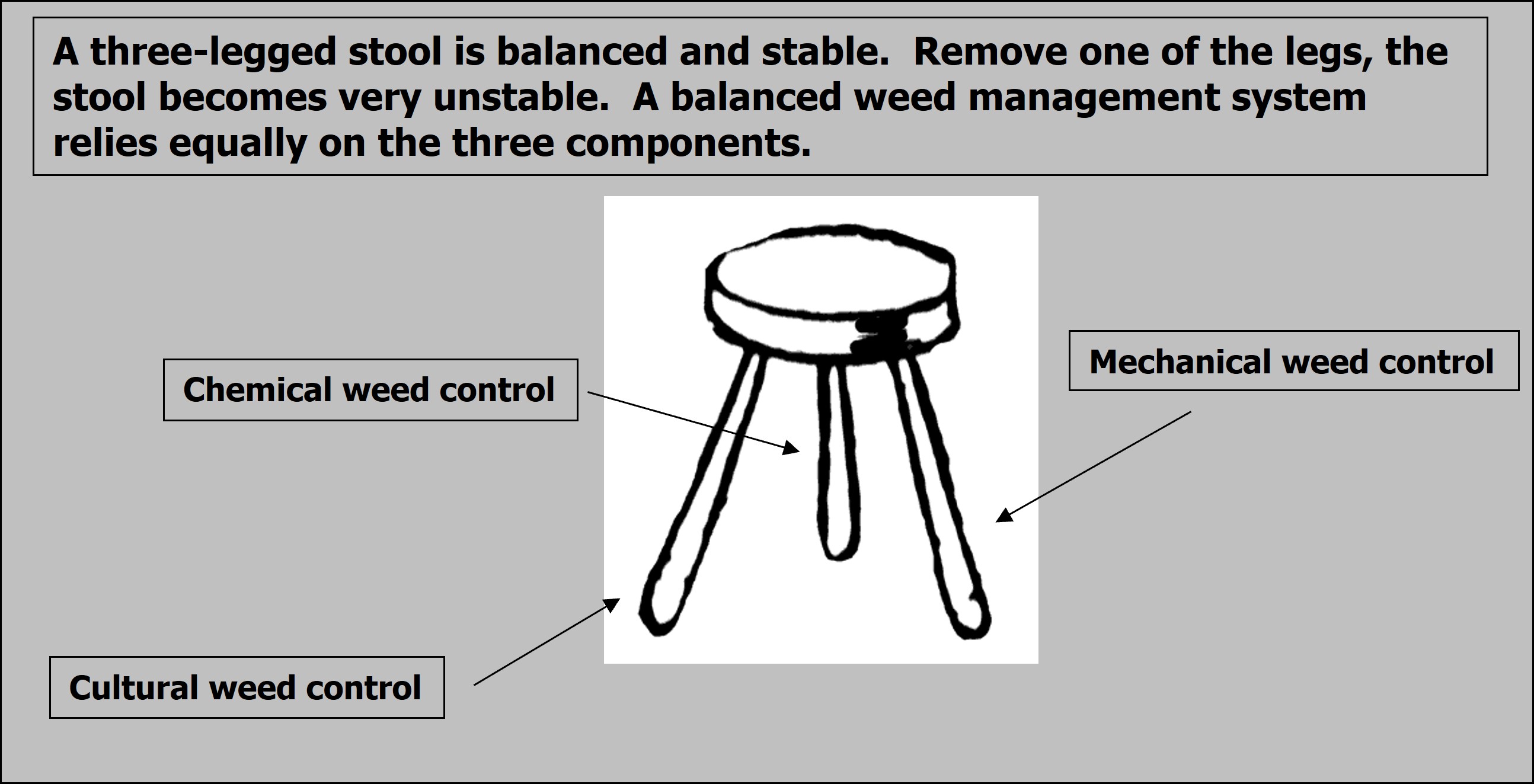
Together, they form a stable, three-legged stool. Remove one leg, and the system becomes unstable.
Cultural Weed Control
Cultural control focuses on creating conditions where forage crops thrive and weeds struggle. Healthy, vigorous crops naturally suppress weed emergence and reduce losses from competition.
Cultural practices include:
- Choosing between conventional tillage or no till systems. Both work in unique ways.
- Building soil fertility
- Selecting forage species suited to your site
- Planting at the correct depth and timing
When cultural practices are strong, weeds have fewer opportunities to establish.
Mechanical Weed Control
Mechanical control uses physical methods to cut, shred, or disrupt weeds. In food plots, this typically means:
- Tillage before planting
- Mowing during the growing season
These tools don’t eliminate every weed, but they significantly reduce weed pressure and prevent seed production.
Chemical Weed Control
Herbicides are one of modern agriculture’s most powerful innovations. They allow efficient, large-scale food production with fewer workers. But in food plots, herbicide options are limited—and there are more weed species than herbicides available.
Some weeds simply cannot be controlled with the products labeled for food plots. That’s why herbicides should be viewed as one tool, not the entire strategy.
The Three-Legged Stool: A Better Way to Think About Weed Control
Picture your weed management plan as a three-legged stool:
- One leg is cultural control
- One leg is mechanical control
- One leg is chemical control
A stool with all three legs is stable. Remove one, and it wobbles. Remove two, and it collapses.
Relying solely on herbicides is like trying to sit on a one-legged stool. It’s unstable, unreliable, and guaranteed to fail when weed pressure spikes or herbicide options fall short.
The Bottom Line
A successful food plot isn’t built on a single tactic—it’s built on balance. When you combine cultural practices, mechanical tools, and herbicides, you create a resilient system that keeps weeds in check and your forage thriving.
Integrated Weed Management isn’t just a concept. It’s the practical, proven path to healthier food plots and fewer weed headaches.