Sweat Equity: Sometimes It's the Only Solution
Sweat Equity: Sometimes It's the Only Solution
By W. Carroll Johnson, III
Agronomist and Weed Scientist, Whitetail Institute
It is human nature to look for ways to simplify life and make everyday tasks easier. Food plot management is no exception. Unfortunately, when it comes to controlling perennial broadleaf weeds, there are rarely quick or easy answers.
These weeds are challenging in any agricultural setting, even where growers have access to a full arsenal of herbicides. In food plots, however, herbicide options are much more limited. That combination of restricted control tools and the persistent nature of perennial broadleaf weeds can turn weed management into a frustrating challenge. As a weed scientist, that is difficult for me to admit. For food plotters, it is probably even harder to hear.
Earlier in the summer of 2026, I had an ongoing conversation with a knowledgeable customer dealing with an infestation of broadleaf dock in his Imperial Whitetail Clover food plot. Broadleaf dock is a troublesome perennial weed that can sometimes be suppressed with Slay Maxx when applied at the highest labeled rate, but timing is critical. The best results are achieved very early in the spring when broadleaf dock plants are still seedlings.
In this case, the situation was far less ideal. The broadleaf dock plants were already flowering, and the infestation was scattered throughout the clover field. Theoretically, individual plants can be targeted through careful spot-spraying, but the practicality of that approach depends largely on weed density and plot size.
Rather than accepting the problem, this customer rolled up his sleeves and got to work.
Determined to regain control of his food plot, he spent several exhausting hours meticulously spot-spraying broadleaf dock plants. Once the herbicide began taking effect, he followed up by hand-clipping the dying weeds and removing seedheads to reduce future seed production. It is worth noting that this work took place during the middle of summer under conditions that could only be described as "seasonal"—hot, humid, and uncomfortable.
The effort was anything but easy.
The reward, however, was significant.
Today, that food plot is in far better condition than it was just a few months earlier. The broadleaf dock infestation has been dramatically reduced, and the clover stand has had an opportunity to recover and thrive.
My words cannot adequately express the respect I have for customers like this one. Food plotters sometimes find themselves facing weed problems that cannot be solved with a simple herbicide application. They understand the limitations, assess the situation realistically, and then do whatever it takes to protect the investment they have made in their food plots.
In this particular case, the infestation was localized enough that spot-spraying and hand-clipping remained a feasible strategy. More importantly, the customer was willing to invest something many people overlook when managing a food plot: sweat equity.
Sometimes there is no silver bullet. Sometimes there is no shortcut.
Sometimes, sweat equity is the only choice.
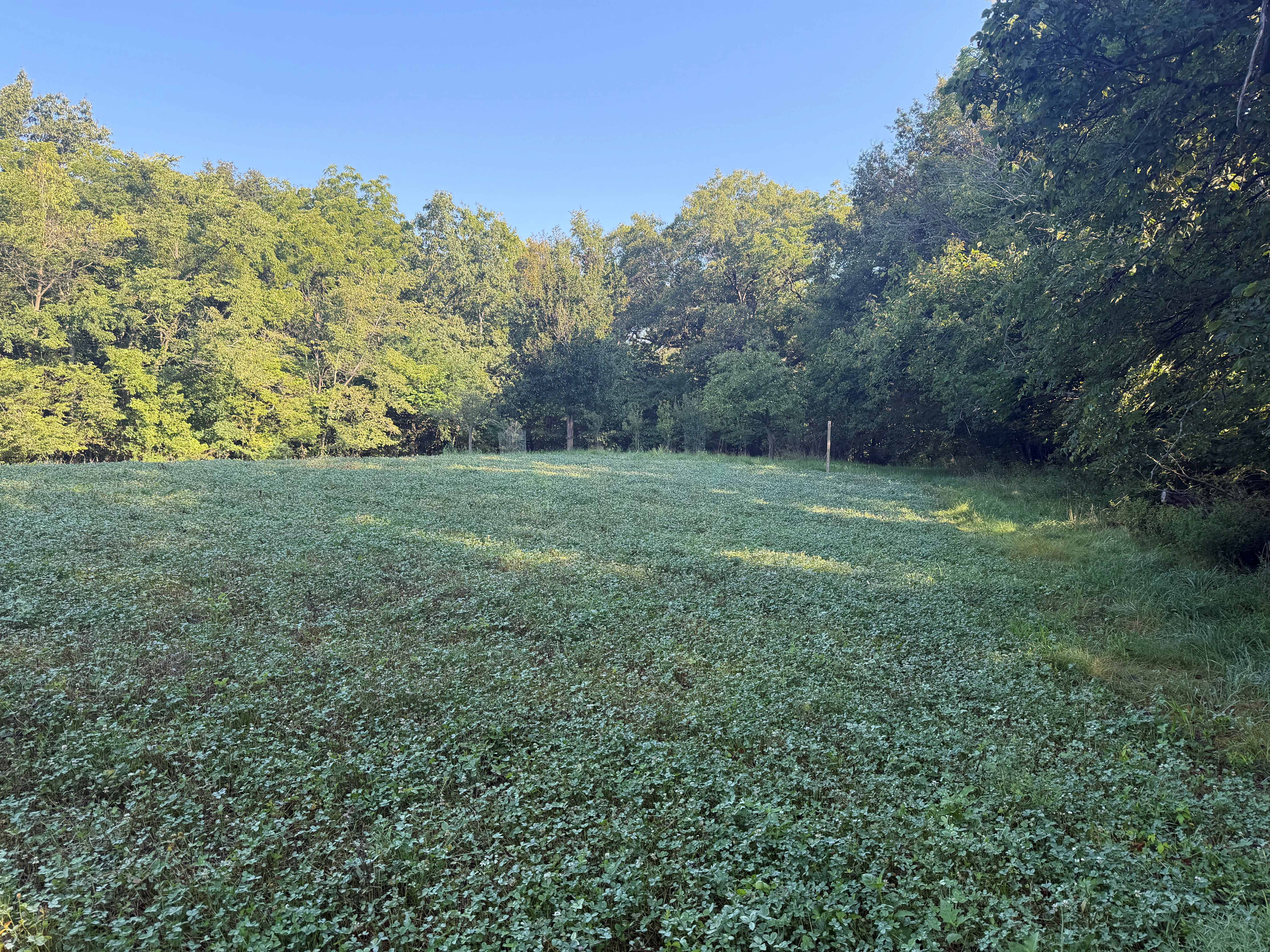
Before
This planting of Imperial Whitetail Clover had a spotty infestation of broadleaf dock, a troublesome perennial broadleaf weed.
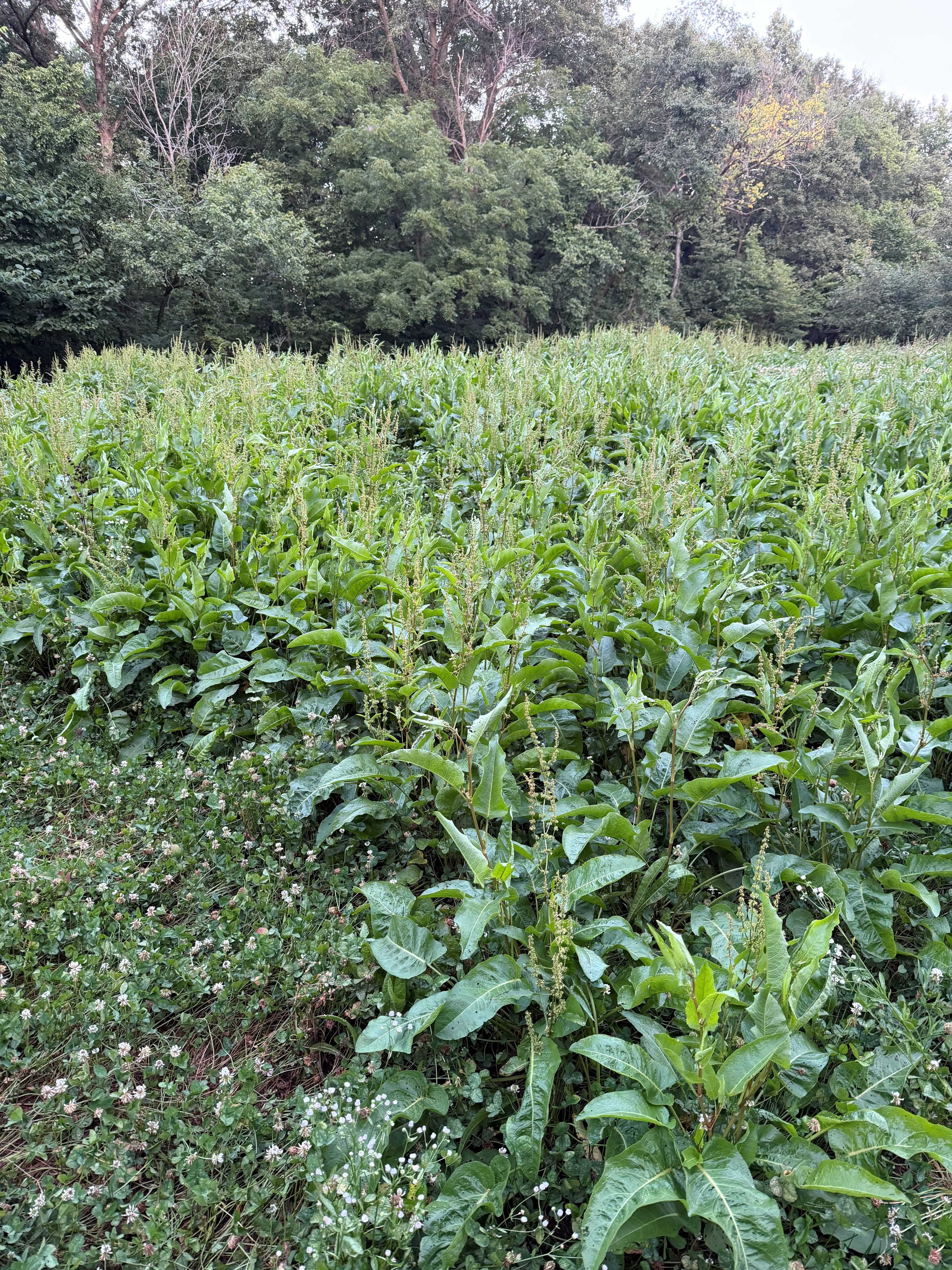
After
Following careful spot-spraying and removal of seedheads from dying plants, the clover food plot was dramatically improved. The success came from determination, persistence, and a willingness to invest sweat equity when no easy solution existed.