
Spray First and Then Mow? Or the Opposite?
Spray First and Then Mow? Or the Opposite?
By W. Carroll Johnson, III, PhD
Agronomist & Weed Scientist, Whitetail Institute
Takeaway: When grasses in a clover plot get too big for ideal Arrest Maxx control, and they’re still green, the most reliable sequence is spray first, wait, then mow. It’s not perfect—but it’s the best path when timing has slipped.
When Life Gets in the Way: A Real-World Scenario
Back in mid-August 2025, a customer reached out with a classic late-summer problem: large grasses towering over his clover plot. He hadn’t been able to spray earlier in the season, and now the grasses were big, some with seedheads, but importantly—still green. That detail matters more than anything else.
His question was simple but tricky: Should he spray first and then mow, or mow first and then spray?
This is one of those agronomy moments where there isn’t a clean, textbook answer. It’s a judgment call—one that depends entirely on the chemical nature of Arrest Maxx and the condition of the grasses.
Why Spraying First Made the Most Sense
After thinking it through, my recommendation was:
Spray Arrest Maxx + Sure-Fire Crop Oil Plus at a high rate (16 fl oz/A), wait two weeks for symptoms, then mow.
Here’s why that sequence matters:
- Arrest Maxx only enters through green, living foliage. If you mow first, you remove the very tissue the herbicide needs.
- Large grasses are already harder to control. You need every advantage you can get.
- Symptoms develop slowly. Arrest Maxx doesn’t show quick burn-down. It quietly disrupts growth at the growing point, and visible decline may take 2–3 weeks.
For a refresher on Arrest Maxx symptom progression, see: The Rest of the Story: Why Patience Matters With Arrest Maxx.
Managing Expectations: This Was a “Desperate Situation”
I told the customer plainly: This was not going to be a textbook success. The grasses were too large for ideal control.
The best realistic outcome was:
- The herbicide would injure the grasses enough to slow regrowth after mowing.
- Seed production would be stopped or greatly reduced.
- Clover would get sunlight again and rebound for fall growth.
Outright control? Not likely. But suppression and release of the clover were achievable.
Two weeks later, he reported back: Spraying first, then mowing, worked surprisingly well. The grasses declined, clover surged, and the plot entered autumn in good shape—a fortunate outcome given the circumstances.
Critical Reminder: Arrest Maxx Requires Green Tissue
This is the detail that decides everything:
If grasses have begun to “dry down,” Arrest Maxx will not control them.
Once stems and leaves lose moisture and begin senescing, the herbicide cannot enter the plant. At that point, mowing is your only real option—and even that won’t fix the underlying problem.
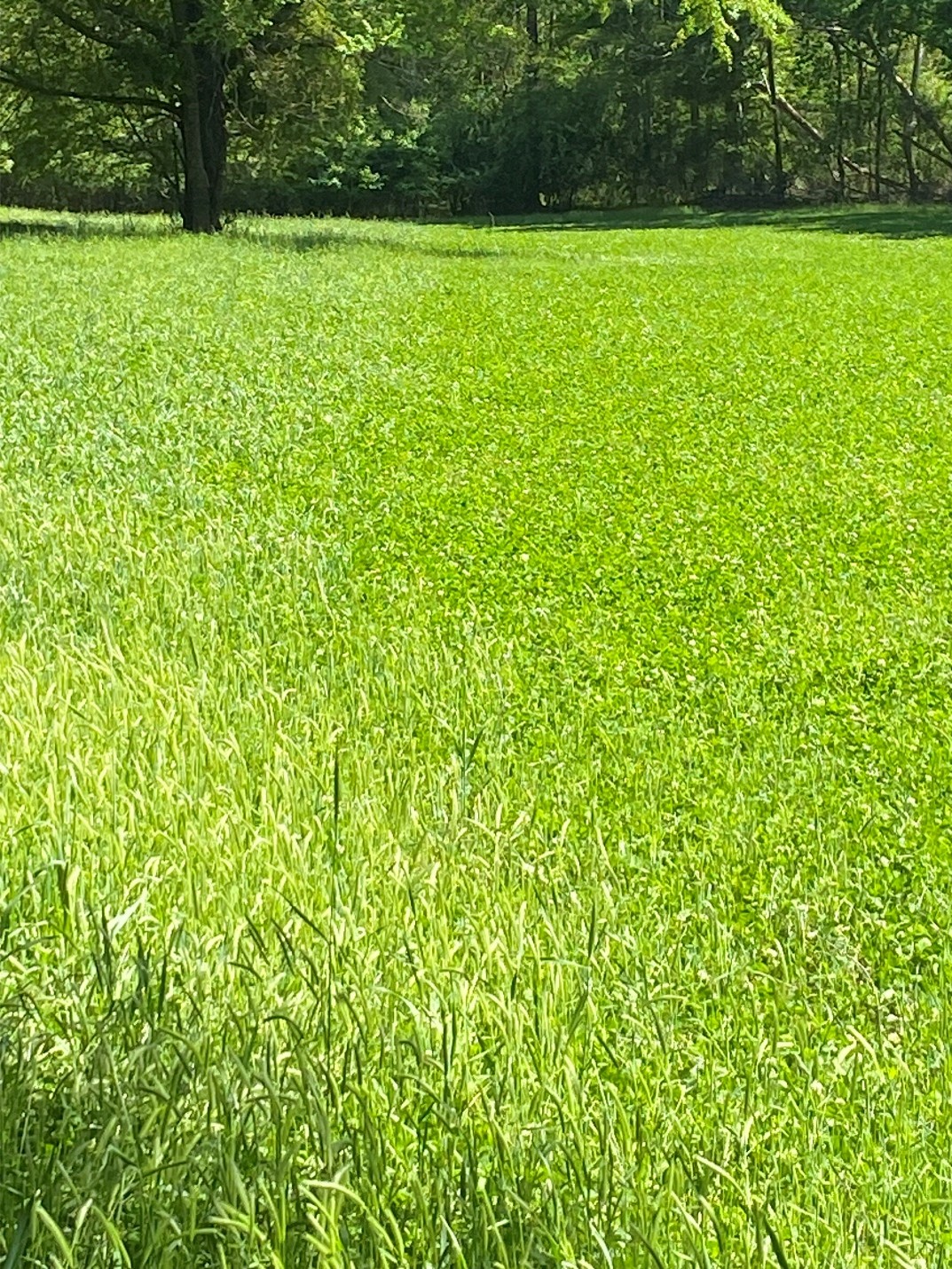
Field Example
In the foreground of the photo (referenced in the original scenario), the grasses are:
- Too large for ideal Arrest Maxx control,
- But still green,
- Actively growing,
- And shading out clover.
In this situation, the best strategy remains:
Spray Arrest Maxx + Sure-Fire Crop Oil Plus → wait two weeks → mow to open the canopy.
Bottom Line
When grasses get away from you in a clover plot:
- If they’re still green: Spray first, then mow. It’s your best chance at meaningful suppression.
- If they’re drying down: Arrest Maxx won’t work. Mow and plan for fall or spring cleanup.
- If they’re small: Spray immediately—this is where Arrest Maxx shines.