Soil–Seed Contact: The Quiet Factor That Determines Food‑Plot Success
Soil–Seed Contact: The Quiet Factor That Determines Food‑Plot Success
By W. Carroll Johnson, III
Agronomist & Weed Scientist, Whitetail Institute
Good soil–seed contact is the single most important physical requirement for reliable germination and the reason some food plots thrive while others fail.
Why Soil–Seed Contact Matters
Soil–seed contact is the moment a seed meets the physical environment it needs to live. For small-seed forage crops such as clovers, chicory, and brassicas, that contact must be intimate, consistent, and uninterrupted.
When seeds are:
- Surrounded by too much plant debris,
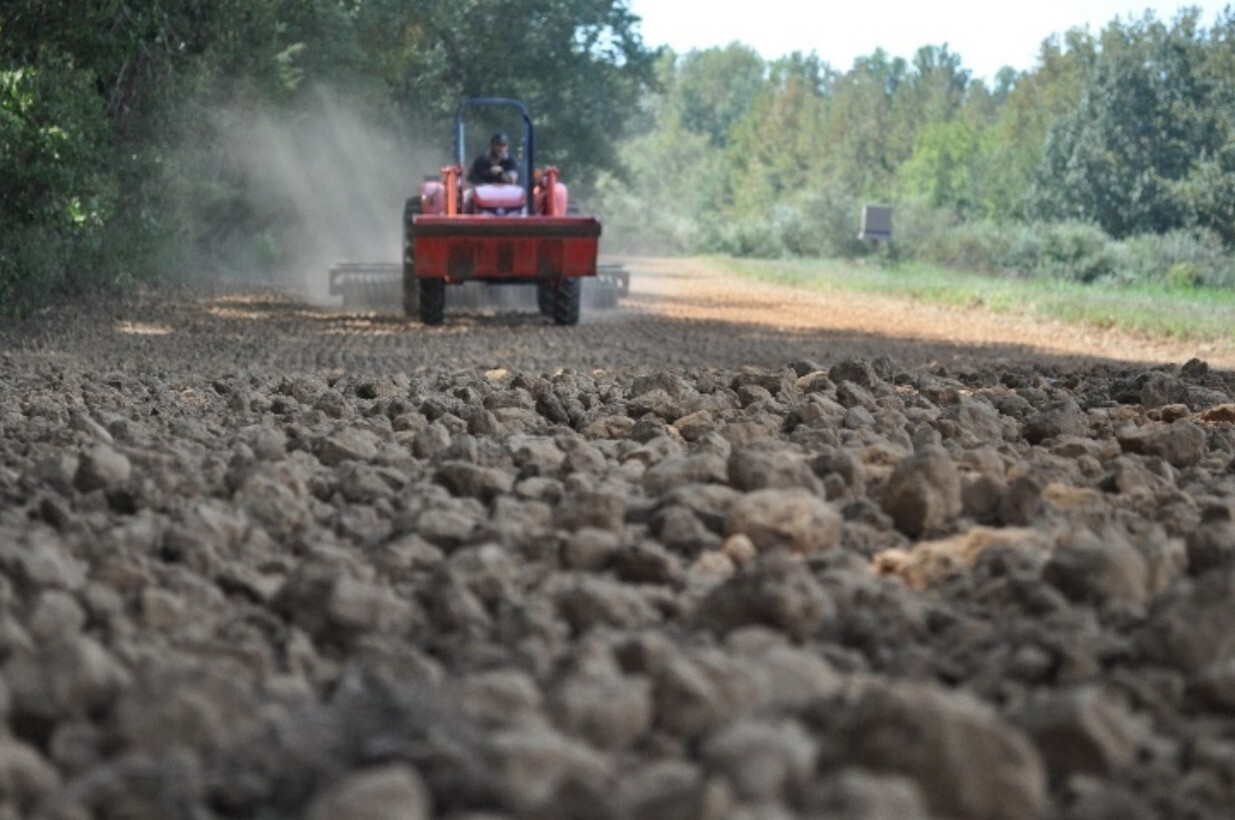
- Trapped in air pockets created by cloddy soil, or
- Simply lying on the soil surface,
Germination becomes unreliable and seedling survival drops sharply. Seeds need to be hugged by soil particles so moisture can move into the seed and activate germination.
This is why two food plots planted with the same seed on the same day can produce dramatically different results. Soil physical properties vary, equipment varies, and conditions vary, so the solution must be common-sense and site-specific, not one-size-fits-all.
Conventional Tillage: Using a Cultipacker
A cultipacker is the classic tool for achieving soil–seed contact in tilled ground. Its cast-iron ridged rollers apply focused downward pressure, which:
- Settles fluffy soil,
- Crushes clods,
- Eliminates air pockets, and
- Creates a firm seedbed ideal for small seeds.
If your soil looks fluffy, chunky, or uneven after tillage, a cultipacker is the difference between a plot that thrives and one that struggles. It’s not optional. It’s essential.
No-Till: Precision Tools Make the Difference
No-till grain drills and no-till forage seeders are engineered to solve the soil–seed contact problem without disturbing the soil surface.
They use attachments that:
- Part crop residue,
- Slice a narrow opening in the soil,
- Place seed at a precise depth, and
- Press soil firmly around the seed.
This system works beautifully, but only with the right equipment. Simply broadcasting seed into standing residue or onto last year’s cover crop is a high-risk strategy. Without mechanical assistance, soil–seed contact is inconsistent and germination suffers.
Why “Just Throwing Seed Out” Fails
Broadcasting seed onto debris or rough soil creates three predictable problems:
- Seed sits on top of residue, never touching soil.
- Air pockets prevent moisture transfer.
- Uneven seed depth leads to uneven emergence.
These failures aren’t about seed quality or fertilizer. They’re about physics. Seeds must touch soil.
When No-Till Works for Small Seeds
Small-seed forage crops can be planted no-till into a cover crop, but only with a true no-till forage seeder. These machines are designed to cut through residue and ensure soil–seed contact even in heavy biomass.
If you don’t have one, choose a planting method that matches your equipment, not the other way around.
The Bottom Line
Soil–seed contact is the quiet, invisible factor that determines whether your food plot establishes properly. Whether you’re using conventional tillage or no-till, the principle is the same:
Seeds must be surrounded by soil, not debris, not air, not hope.