Dodder: The Parasitic Plant Hiding in Clover Plots
Dodder: The Parasitic Plant Hiding in Clover Plots
By W. Carroll Johnson, III, PhD
Agronomist & Weed Scientist
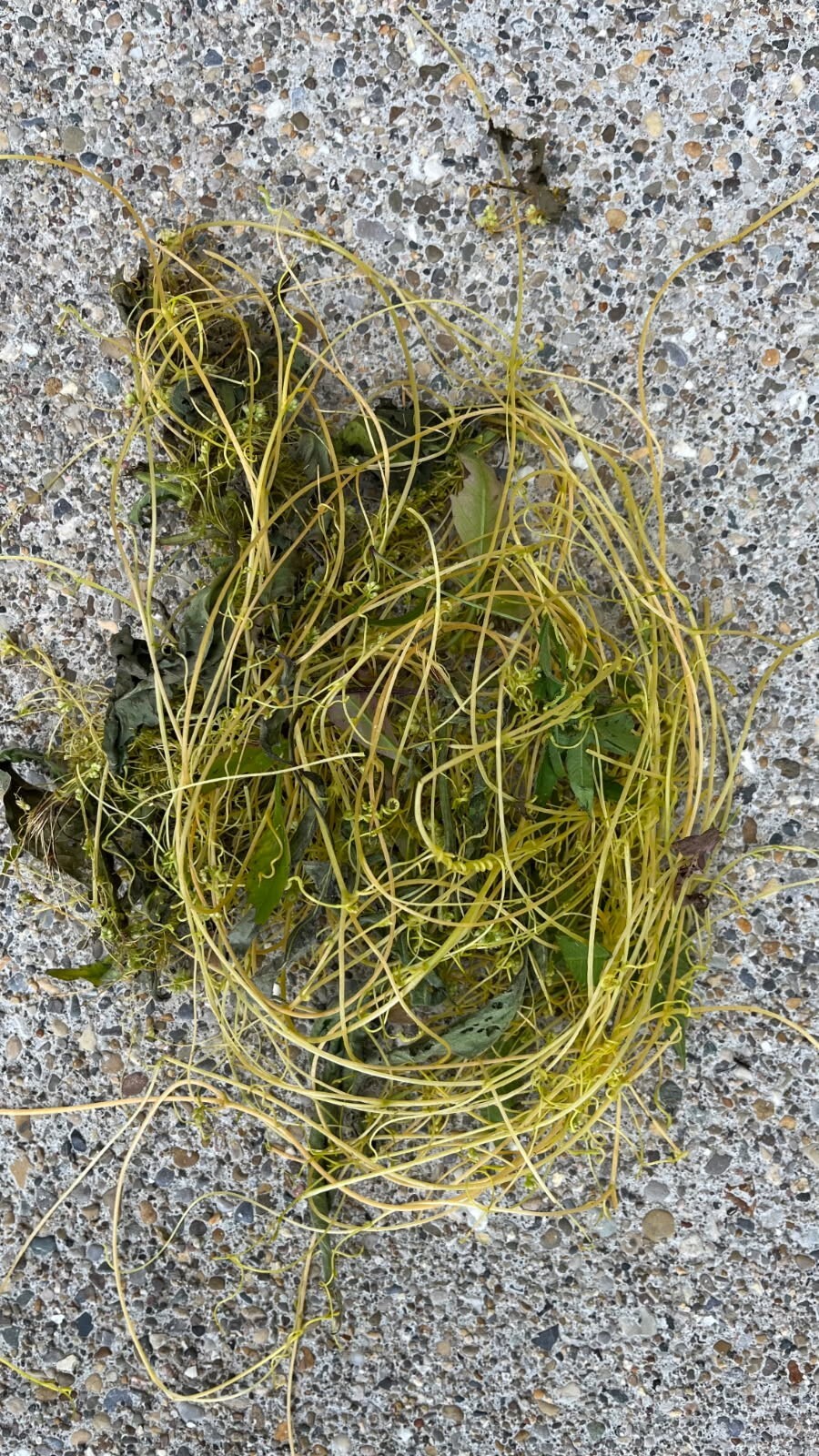
Every now and then, a weed question comes completely out of left field. One of those moments arrived recently when a long-time customer sent me a photo of what looked like a tangled wad of pale spaghetti draped across his clover food plot.
That “spaghetti” was dodder—a parasitic plant that survives entirely at the expense of its host.
What Dodder Is—and Why It’s So Strange
Dodder is technically a plant, but it doesn’t behave like one. It has no roots, only a trace amount of chlorophyll, and cannot survive on its own. Instead, it wraps itself around a host plant and siphons off nutrients through tiny suction-cup structures called haustoria.
Once established, dodder forms a pale, thread-like mass that coils tightly around clover, alfalfa, or other susceptible crops. In commercial production, dodder infestations can cause significant yield loss, and the same threat exists in food plots. Dormant dodder seed in the soil can linger for years, waiting for the right conditions to emerge.
Dodder in Clover Food Plots
Dodder occasionally shows up in clover plots, especially where soil seedbanks contain old weed seed. When it does, early intervention is critical.
Dodder can be suppressed with Slay Maxx, but timing determines success.
- Apply Slay Maxx at 6 fl oz/A
- Include ailinstitute.com/sure-fire-crop-oil-plus/" target="_blank" rel="noopener noreferrer">Sure-Fire Crop Oil Plus
- Spray early spring, before dodder emerges, once temperatures exceed 50°F
Slay Maxx provides soil residual control, allowing it to stop dodder seedlings before they attach to clover plants—an essential step, because once dodder is physically connected, control becomes far more difficult.
A Personal History with Dodder
My relationship with dodder goes back nearly half a century. I first learned about it in an undergraduate weed science class in the late 1970s. As you might imagine, a room full of 20-year-old men found endless opportunities for jokes about “the farmer’s dodder.”
Forty-eight years later, the punchline has changed. Now the jokes revolve around me “doddering around like an old man.”
Some weeds follow you through your career—dodder just happens to be one of mine.