Boots on the Ground: Looking for Smartweeds
Boots on the Ground: Looking for Smartweeds
W. Carroll Johnson, III, PhD
Agronomist and Weed Scientist
Smartweeds show up with frustrating consistency. By midsummer, our technical support team at Whitetail Institute begins hearing from land managers who suddenly find a broadleaf weed taking over their food plots. More often than not, the culprit is a species within the group commonly known as smartweeds.
The discouraging part is that smartweeds are not difficult to control when they are small. Slay Maxx plus Sure-fire Crop Oil Plus provides excellent control when smartweeds are no taller than 3 inches. Once they exceed that height, control drops sharply. By the time most people reach out for help, the weeds are already too large for Slay Maxx or any other food plot herbicide to work. At that point, the situation is essentially beyond rescue.
Why Timing Matters
Smartweeds begin emerging around mid-May. That means preparation must begin before they appear. Have Slay Maxx and Surefire on hand. Make sure your sprayer is calibrated and ready. Most importantly, commit to regular scouting.
Do not rely on distant observation. Walk your plots. Get your boots on the ground. Seedling smartweeds are small, subtle, and easy to miss unless you are physically in the field. Early detection is the only window in which herbicide control is possible.
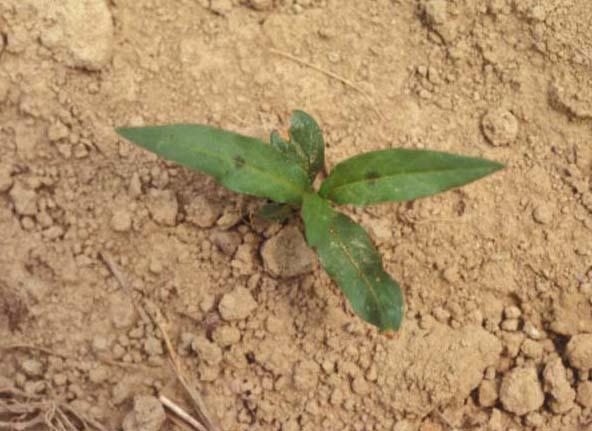
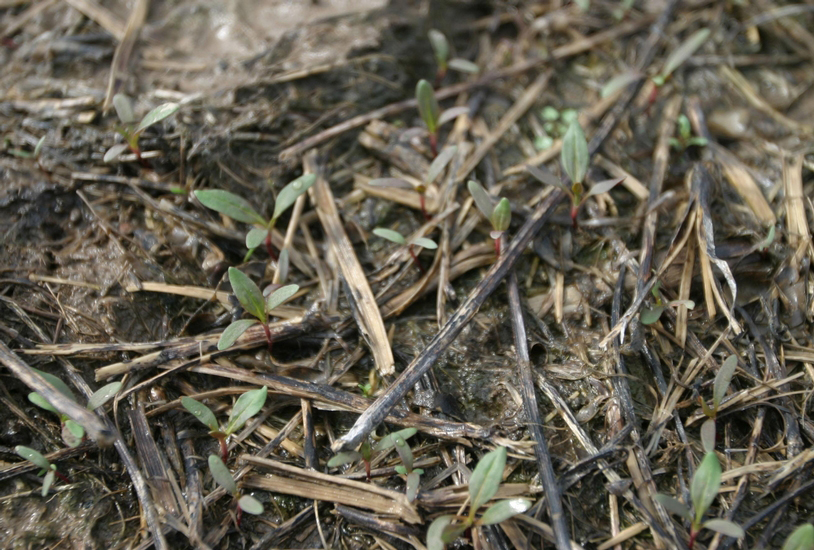
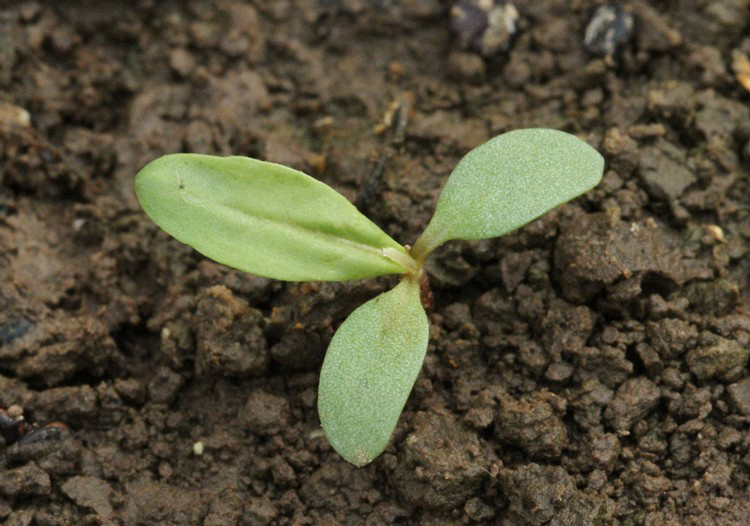
Learning to Identify Smartweeds Early
It would be easy to show photos of large, flowering smartweeds. The problem is that once they reach that size, the battle is already lost. Agronomists and weed scientists are trained to identify weeds at the seedling stage because that is when control is achievable.
Study images of young smartweeds. Learn their appearance when they are only a few inches tall. Remember the critical threshold for Slay Maxx plus Surefire. Smartweeds must be no taller than 3 inches for reliable control.
Winning the Weed War
The outcome of weed management in a food plot is usually decided between late spring and early summer. Warm-season weeds, including smartweeds, are easiest to control when they are small. This is the period when diligence pays off.
If your plot has a history of smartweeds, assume they will return. Scout early. Scout often. Windshield scouting will never reveal seedlings this small. Only true boots-on-the-ground scouting will.
The Critical Size Limit
There is a maximum stage of growth at which Slay Maxx can control smartweeds. Once they exceed that size, no food plot herbicide will provide effective control. Knowing this limit and acting before weeds surpass it is the difference between a clean plot and a lost season.