
Winter Annual Weed ID: Henbit vs. Purple Deadnettle
Winter Annual Weed ID: Henbit vs. Purple Deadnettle
By Joyce Allison Tredaway, Ph.D.
Whitetail Institute of North America
Every winter, as food plots begin to green up, we start getting the same question from land managers across the country: “What is this purple-flowered weed taking over my plot—and how do I control it?”
If you’ve asked that question, you’re in good company. Two common winter annuals—henbit and purple deadnettle—often appear this time of year, and because both produce small purple blooms, they’re frequently confused. While they’re closely related, identifying which one you’re dealing with is the first step toward understanding your management options.
Why These Two Weeds Get Confused
Henbit (Lamium amplexicaule) and purple deadnettle (Lamium purpureum) are members of the mint family. Like many mint species, they share several traits:
- Square stems
- Opposite leaves
- Purple flowers arranged in whorls
- Winter annual life cycle
- Reproduction by seed
Because of these similarities, flower color alone won’t tell you which species is in your plot. The key differences lie in the leaves.
How to Tell Henbit and Purple Deadnettle Apart
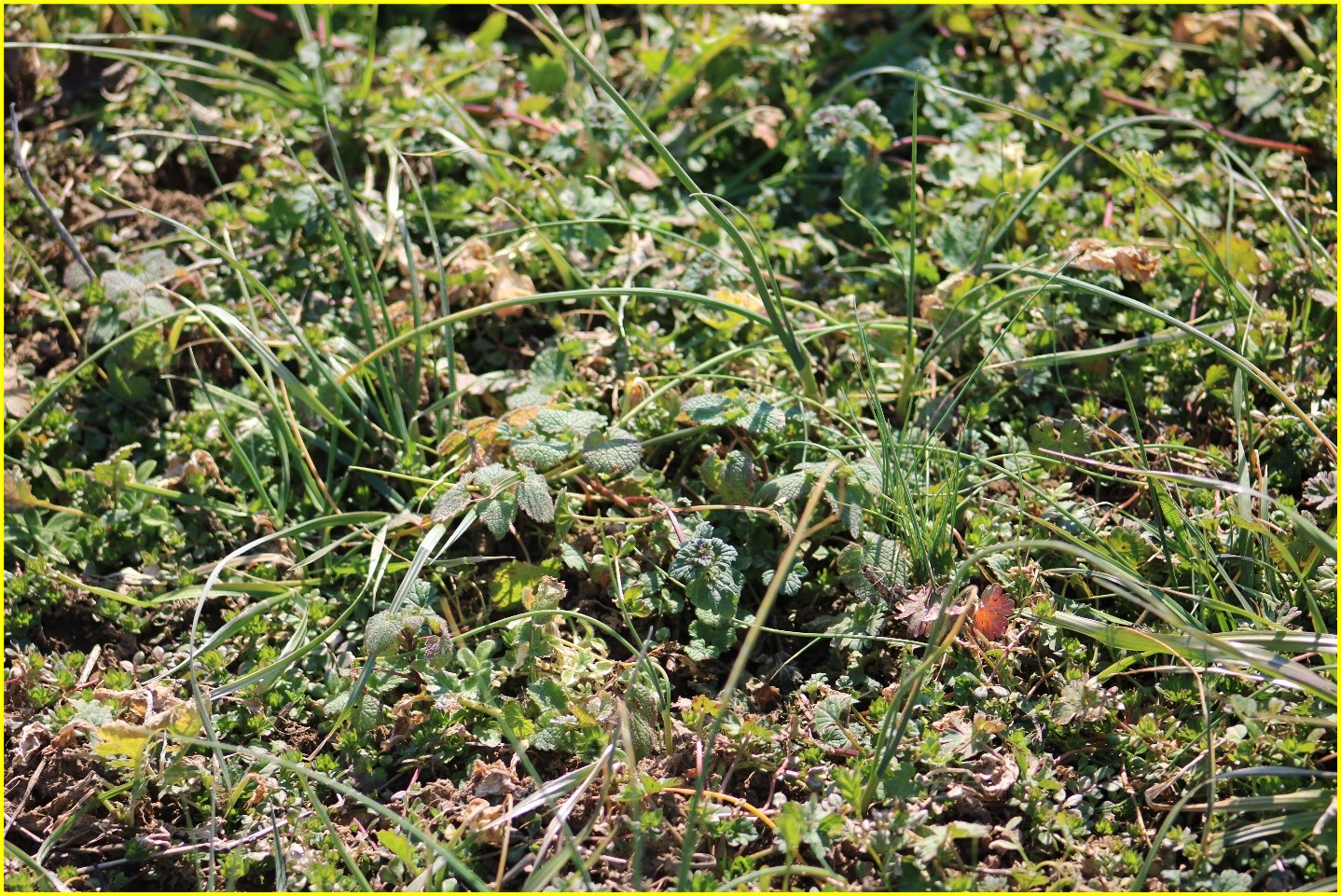
Henbit
- Leaves: Attach directly to the stem (no petioles).
- Shape: Broadly egg-shaped with bluntly toothed margins.
- Color: Green to slightly purplish; prominent veins on the underside.
- Flowers: Reddish purple with darker spots on the lower petal, arranged in whorls.
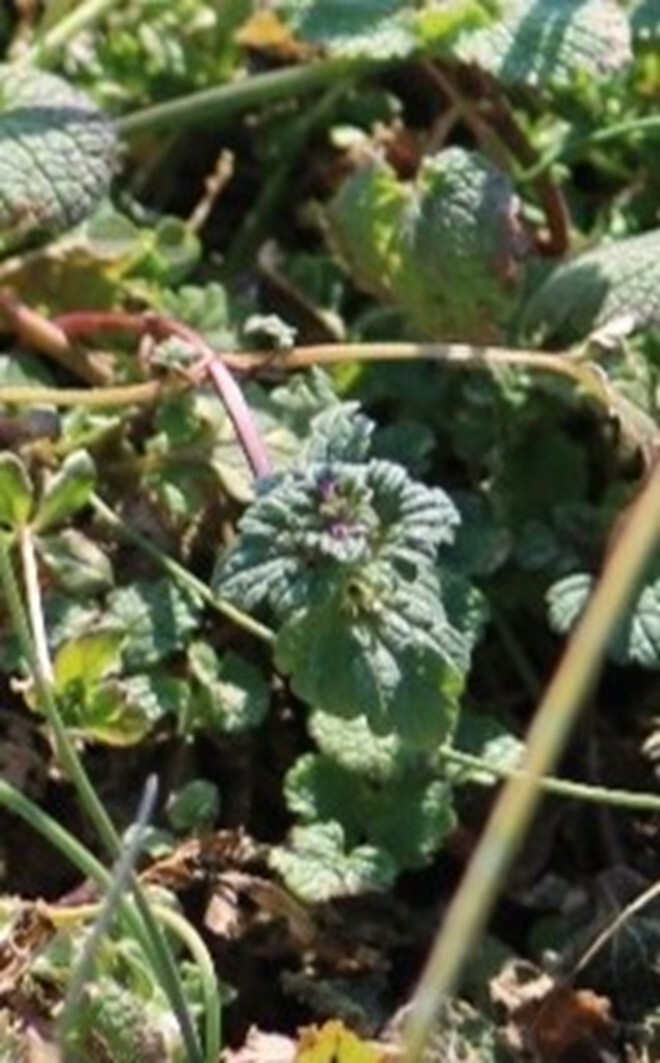
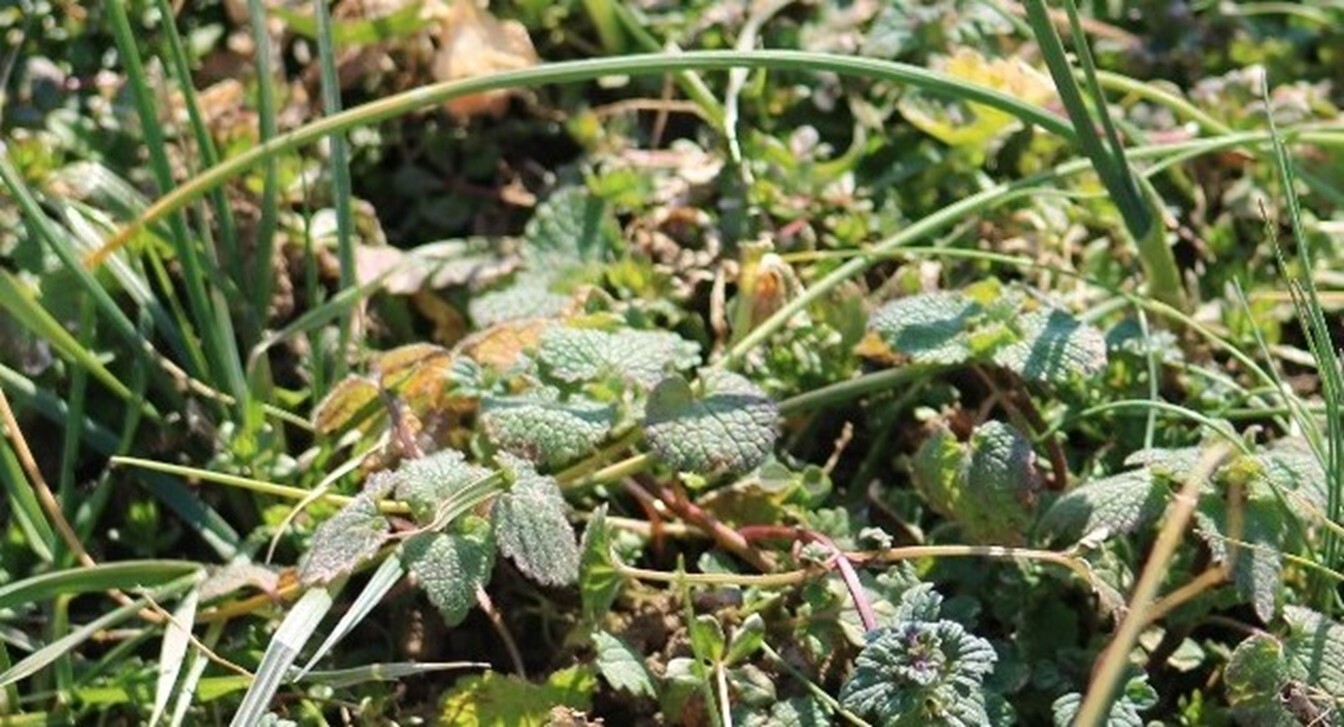
Purple Deadnettle
- Leaves: Lower leaves have long petioles; upper leaves have short petioles.
- Shape: More triangular with shallow lobes and blunt teeth.
- Color: Upper leaves often appear more purplish than henbit.
- Flowers: Similar reddish purple blooms with darker spotting on the lower petal.
Once you know what to look for—especially the presence or absence of petioles—identification becomes much easier.
Control Options in Food Plots
Here’s the part most food plotters want to know: What will control these weeds?
Slay Maxx and Winter Annual Mints
Neither henbit nor purple deadnettle is listed on the Slay Maxx label as a controlled weed. However, our demonstration farm near Wetumpka, Alabama, provided an important insight:
- Henbit was successfully controlled when Slay Maxx was applied in very early autumn before henbit emergence.
- Slay Maxx will not control either weed once it has emerged.
Slay Maxx is absorbed through foliage and roots, but in this case, control appears to come from root uptake by seedlings as they germinate. Because purple deadnettle is so closely related to henbit, it is reasonable to deduce that a preemergence autumn application may also suppress purple deadnettle.
Important Application Notes
- Timing is everything—apply Slay Maxx early, before winter annual weeds emerge.
- Always include an adjuvant such as Sure Fire Crop Oil to ensure control of other broadleaf weeds that may already be present.
- Once henbit or purple deadnettle is visible above ground, Slay Maxx will not control them.
Final Thoughts
Henbit and purple deadnettle are common winter annuals that can blanket food plots and frustrate land managers. While they look similar, a quick look at the leaves will tell you which species you’re dealing with. Although postemergence control options are limited in clover and other perennial forages, a well-timed autumn application of Slay Maxx can help prevent these weeds from establishing in the first place.
Staying ahead of winter annuals is one more way to keep your plots clean, productive, and ready to deliver maximum nutrition when deer need it most.
