The Value of an Exclusion Cage
The Value of an Exclusion Cage
By W. Carroll Johnson, III, PhD
Agronomist and Weed Scientist, Whitetail Institute
Some of the best lessons in land and wildlife management come from moments so simple they border on humorous. One of my favorites goes back to the early days of Whitetail Institute—long before food plotting became the sophisticated, research-driven practice it is today.
My late father, Dr. Wiley Johnson, was one of the company’s earliest employees and spent 18 years as a clover breeder. In the mid-1980s, when the idea of a “managed food plot” was still new, he took a call from a customer who was frustrated that his clover wasn’t growing. According to the caller, the plants were stunted and cropped tight to the ground.
My father, in his calm, understated way, suggested a simple test.
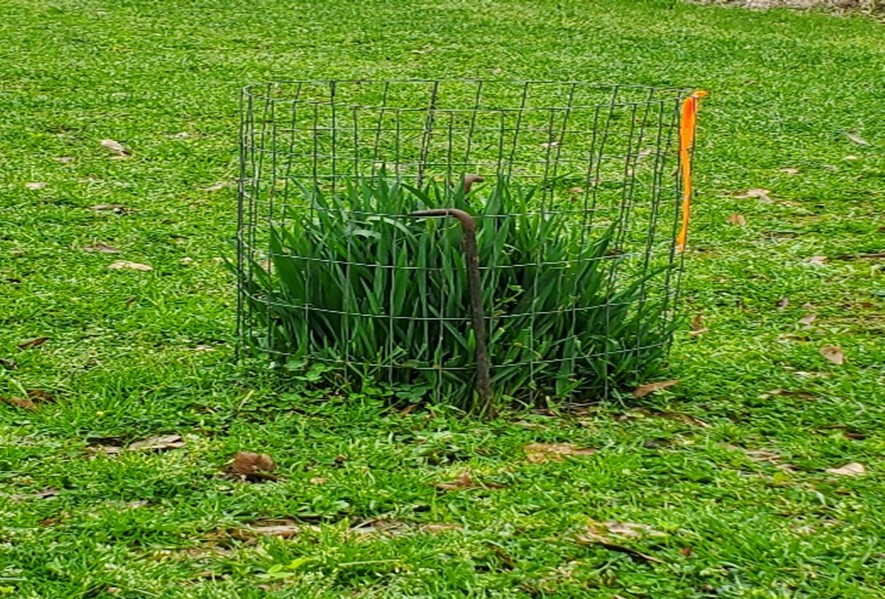
“Take some hog wire,” he said, “shape it into a tube about two feet across, and anchor it in the middle of your plot.”
A few weeks later, the customer called back—this time amazed.
“What did you treat that wire with?” he asked. “The clover inside it is growing like crazy!”
My father paused, then delivered the kind of dry, matter-of-fact line he was known for:
“The deer can’t graze inside the wire tube.”
Silence. Then a deep, genuine belly laugh. The simplicity of the exclusion cage had never occurred to him—but once he saw it, everything made sense.
Why Every Food Plot Needs an Exclusion Cage
Exclusion cages—also called grazing cages—are one of the most valuable, yet overlooked, tools in food plot management. Their power lies in what they reveal.
1. They Separate Poor Growth From Heavy Grazing
When a plot looks thin or stunted, it’s easy to assume something is wrong with the soil, seed, or fertilizer program. But deer pressure can mimic nutrient deficiency or poor establishment.
Inside an exclusion cage, forage grows without browsing pressure. That protected growth becomes your baseline—your “control group”—and it tells the truth about your plot’s potential.
2. They Reveal Deer Feeding Preferences Throughout the Year
Years ago, I planted a beautiful Imperial Whitetail Clover plot in a creek bottom in southern Georgia. It grew thick and lush all season, but trail cameras showed very little deer feeding.
Then, after the season ended, the plot looked like a golf course putting green—mowed tight.
What happened?
Acorns.
A heavy swamp oak crop kept deer in the woods for months. Only after the last acorn was gone did they shift to the clover. That exclusion cage—and the timing of the browse line—taught me more about that property’s habitat and deer movement than any camera ever could.
A Simple Tool With Big Impact
An exclusion cage doesn’t need to be fancy. A short section of wire fencing, securely anchored, is all it takes. But the insight it provides is invaluable:
- You see the true growth potential of your forage.
- You understand when and how deer are using your plot.
- You gain a clearer picture of your property’s seasonal food sources.
- You make better decisions about planting, fertilizing, and managing habitat.
At Whitetail Institute, we recommend placing at least one exclusion cage in every food plot. It’s a small investment that becomes an eye-opening—and often humbling—teaching tool.
Sometimes the simplest ideas are the ones that change the way you see your land forever.