Herbicides: The Finer Points of Slay Maxx
Herbicides: The Finer Points of Slay Maxx®
By Joyce Allison Tredaway, Ph.D. - Whitetail Institute of North America
If you read the previous blog, you know I encouraged folks to order Arrest Maxx® early so it’s ready the moment weeds begin to emerge. The same advice applies to Slay Maxx®—but with this herbicide, timing and technique matter even more.
Slay Maxx is incredibly effective within its weed spectrum, but it’s not as forgiving as Arrest Maxx when conditions aren’t ideal. Before you spray, it’s worth understanding the nuances that make Slay Maxx work to its full potential.
What Slay Maxx Controls
Slay Maxx is designed to control broadleaf weeds in:
- Clover
- Alfalfa
- Soybeans
- Peas
This makes it a key tool for maintaining clean, productive food plots built around legumes.
Crop Tolerance: Don’t Spray Too Early
Clover and alfalfa seedlings must reach a minimum level of maturity before they can safely tolerate Slay Maxx. Specifically, they need:
- At least two trifoliate leaves
- Healthy, established growth
Seedling alfalfa looks similar to clover at this stage. Spraying too early can injure or kill your forage, so patience pays off.
Crops That Slay Maxx Will Kill
Some crops are highly sensitive to Slay Maxx and will not survive an application. These include:
- Brassicas (turnip, radish, rape/canola, kale)
- Sugarbeet
- All cereal grains (oats, wheat, rye, triticale, barley)
If your plot includes any of these, Slay Maxx is not the right tool. Always check the label for crop rotation restrictions after treatment.
How Slay Maxx Works
Slay Maxx attacks weeds in two ways:
- Foliar uptake — absorbed through the leaves of treated weeds
- Root uptake — absorbed from the soil by newly emerging seedling weeds
This dual action helps control both existing small weeds and new flushes of seedlings.
Don’t Skip the Surefire® Adjuvant
Slay Maxx must be applied with Surefire® herbicide adjuvant. It improves performance by:
- Helping spray droplets spread and stick to the leaf
- Enhancing penetration through the leaf cuticle
- Improving movement of the herbicide into the plant’s vascular system
Skipping the adjuvant dramatically reduces effectiveness.
Slay Maxx Is a “Small Weed” Herbicide
For best results, broadleaf weeds should be:
- Under 2–3 inches tall
Larger weeds are harder to control, and some species may escape entirely. The Slay Maxx label includes specific weed size guidance—follow it closely.
Know Your Weeds
Not all broadleaf weeds are susceptible to Slay Maxx. Some species are controlled very well; others are not controlled at all. Correct identification is essential so you know whether Slay Maxx is the right choice.
Application Limits and Expectations
- Slay Maxx can only be applied once per year
- It is slow acting, often taking 2–3 weeks before symptoms become obvious
- It can be tank mixed with Arrest Maxx® for broader weed control when conditions allow
The Bottom Line
Slay Maxx is a powerful, precise tool for managing broadleaf weeds in clover, alfalfa, soybean, and pea plots—but only when used correctly. Understanding crop tolerance, weed size, timing, and the importance of the Surefire adjuvant will help you get the clean, healthy plots you’re aiming for.
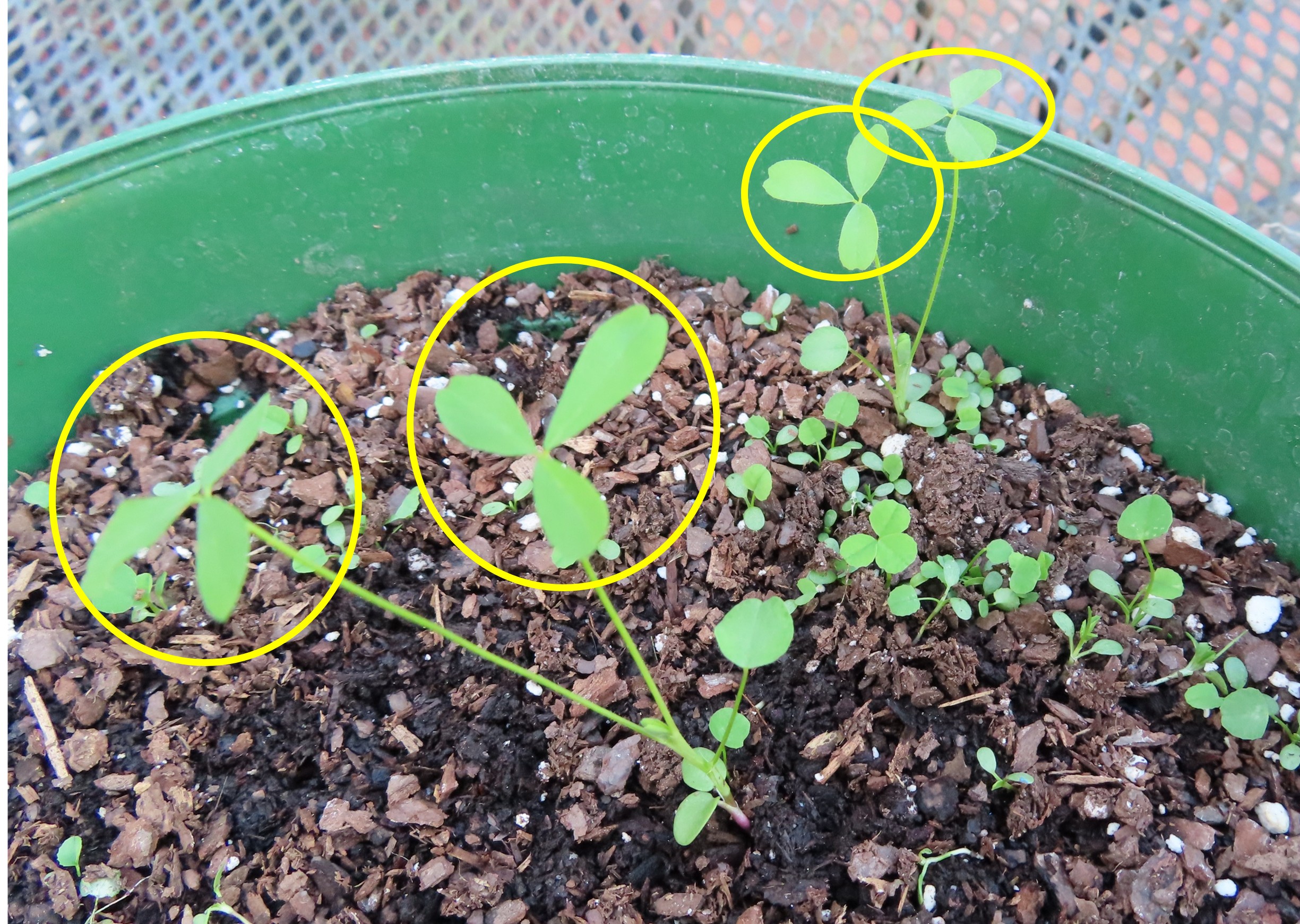
Minimum size that clover must be for a Slay Maxx application. Alfalfa will look similar to clover.